
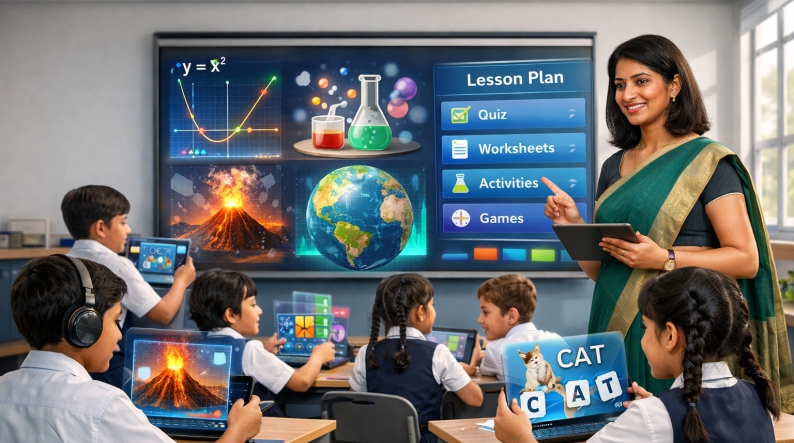
E-learning (or online learning) is evolving faster than ever, and those who still aren’t adapting it are actually failing to upgrade and grow in 2026.
Since the Covid-19 pandemic, this ‘alternative’ to traditional learning has become the new normal so much so that no institutional or classroom learning seems separable from it.
In fact, it would not be wrong to say that e-learning for schools is the core driver of student success and teachers’ support. Whether you are a school, a teacher or a student, virtual learning isn’t just an option anymore; it is essential.
In this blog, I’ll guide you on:
And so much more.
Electronic learning refers to using online learning tools for students and e-learning solutions for schools. For this, we depend on the internet, computers, satellite TV, CD-ROMs, audio and visual resources and the intranet to access multimedia content and engage in interactive learning experiences.
Virtual learning allows learners to:
E-learning for school means modern pedagogy, quality education, better outcomes and scalable growth.
Web-based learning makes education more flexible, easy and accessible to everyone. It also removes barriers of time, place and cost and allows both students and professionals to continue their passion for lifelong learning.
Here is why you should choose modern virtual learning over traditional learning.
| Aspect | E-learning | Traditional learning |
| Accessibility | Easy to access with or without internet | Requires physical space and teaching staff |
| Flexibility | Convenient time and date | Fixed timelines and schedules |
| Cost | More Affordable | Expensive |
| Learning Pace | Personalised pace | Fixed pace |
| Content Updates | Regular updates | Updates may be time-consuming |
| Engagement | 3D videos, animation, AR/VR for maximum engagement | Lecture-based with limited interaction |
| Revision | Easy to revise anytime | Restricted to classroom and notes |
| Scalability | Connect learners worldwide | Limited to local or institutional environment |
| Time Efficiency | Faster learning | More time-consuming |
| Personalisation | Tailored learning paths and recommendations | Not customisable |
| Skill Development | Continuous learning and skill-development | Curriculum-based and rigid structure |
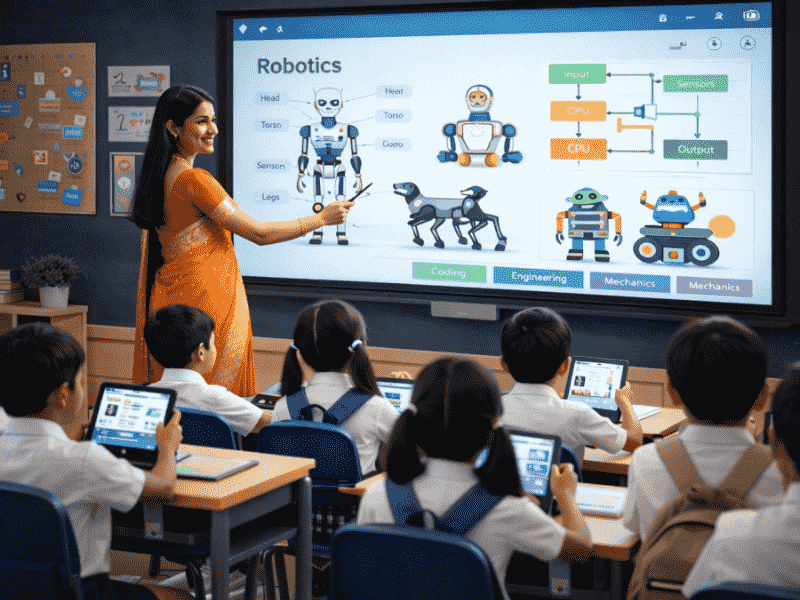
Online learning includes various formats. Let us understand the important types of virtual learning:
Synchronous learning refers to learning that happens in real time, where queries are raised and solved instantly.
Asynchronous learning refers to learning that allows learners to access content at their convenience without real-time interaction.
Blended learning is an approach where an instructor uses digital learning materials and tools in a conventional classroom setup.
Below are the top online learning tools that students and teachers swear by for quality learning, easy access and skill enhancement.
Interactive Educational Platforms:
Interactive learning platforms such as Byju’s, Brilliant, Toppr, Genially, etc. that provide a structured learning experience through a guided, step-by-step learning approach. These edtech platforms provide students interactive 3D animation videos, games, assessments, infographics, and presentations for self-paced learning and engaging learning experiences across all subjects.
Educational Apps and Software
Best education apps for students in 2026 and kids’ learning apps, such as Duolingo, Minecraft Education, Google Earth, NASA, Memrise, etc., for learning on the go. These apps contain interactive exercises and quizzes and provide gamified learning experiences to students. Moreover, parents can also track their kids’ learning progress and personalise the learning paths that suit their needs.
Video Tutorials and Lectures
Online tutorials and classroom lectures, delivered in audio-visuals to make learning fun and engaging. Generally, these lectures and tutorials are pre-recorded and made available to students. Sometimes, these are also live and on-demand video sessions led by industry experts and subject matter experts in that area.
E-books and Digital Textbooks
Digital versions of the printed textbooks are made available online with added interactive elements such as videos, audio files and practice exercises. These digital textbooks can be accessed on laptops, tablets, smartphones, iPads, etc. to help students engage in fun-based learning from anywhere across the globe.
Fun Learning Games
Educational video games to make concepts more fun and easier to understand with game-based learning (GBL). These edtech games multiply students’ interest in learning in many ways, actively engaging them with real-time points, badges, rewards, contests and even helping them track their progress.
Virtual and Augmented Reality Tools
Advanced technologies such as VR and AR have become an integral part of learning, as these offer immersive learning experiences in a safe and controlled environment. Students using AR apps and VR headsets enjoy real-time interaction which fosters hands-on learning experiences and widens their understanding of a subject.
What is e-learning?
E-learning is a method of learning that takes place through digital platforms like websites, apps or online courses.
Why is remote learning important?
Remote learning is important as it makes education more accessible, flexible and suitable for modern learners.
Can online courses really improve skills?
Yes, online courses have proved to help learners gain new skills and upgrade existing ones across various fields at their own pace.
What e-learning courses does Prismart offer?
Prismart offers well-researched e-learning content from playgroup to K12 to give students quality screentime and foster holistic development.
Is internet required for online education?
Not necessarily. Prismart e-learning for schools can be accessed without the internet and contains high-quality videos, worksheets, quizzes and educational games.
How much do online learning videos cost?
Depends on the complexity of the subject and duration of videos. But considering zero infrastructure, staff or any additional costs, e-learning solutions for schools are quite affordable and cost-effective.
What are the benefits of e-learning for students?
Yes, one of the biggest advantages of online or virtual learning is the flexibility to learn anytime and revisit lessons as needed.
Can online courses really improve skills?
Yes, online courses have proved to help learners gain new skills and upgrade existing ones across various fields at their own pace.
What e-learning courses does Prismart offer?
Prismart offers well-researched e-learning content from playgroup to K12 to give students quality screentime and foster holistic development.
Is internet required for online education?
Not necessarily. Prismart e-learning for schools can be accessed without the internet and contains high-quality videos, worksheets, quizzes and educational games.
Prismart Productions is a leading edtech company providing extraordinary digital learning solutions to over 1300+ schools worldwide. Our dynamic and future-ready e-learning solutions transform boring classrooms into interactive, engaging and hands-on learning spaces. From 3D lesson videos to robotic DIY kits, AR, virtual reality experiences, worksheets, assessments, quizzes and educational games, there are many benefits of e-learning for students.


